
Some changes to Sustainability by Numbers in the new year

It has been a busy year for me. I’ve still published a lot on this Substack, but not as much as I’d want. I do this in my spare time, and it’s truly an enjoyable outlet to think things through, dig into questions, and see if I can get my ideas across.
I’m extremely grateful to everyone who follows along, gets in touch, and engages thoughtfully with each of my posts (even if you disagree). There are now more than 67,000 of you.
As we move into another year, I’ve decided I’m going to broaden the focus of my Substack a bit. So far, it has mostly focused on environmental problems (and has been pretty broad within that category: everything from deforestation and fertilisers, to clean energy and artificial intelligence). This is something I’ve always been passionate about (and still am), but I also spend a lot of time trying to understand other pressing problems through the lens of data.
I already do this at Our World in Data (my main job), where I write about everything from foreign aid and demographic change to technology, tuberculosis, global health media bias.
I’ve often wanted to cover these types of topics on this Substack, but feel limited to sticking to strictly environmental ones. That is what I think a lot of my audience signed up for. While it’s also implied in the name — “Sustainability by Numbers” — as anyone who has read my recent article will know, all of the issues that matter for human development today also fall within my definition of “sustainability”. But my guess is that people automatically think about environmental problems when it’s mentioned.
In 2026, I’ve decided to take the leap and branch out a bit. I’ll still write a lot about energy, climate and other environmental stuff. But I’ll also cover other issues. That includes everything from demographics and technological change to global health and development. The approach of my work won’t change: it will be data-led and focused on what the numbers can tell us about a particular problem or its solutions.
I know that I might initially lose quite a few subscribers. That’s fine. I hope that those who follow me for discussion on environmental topics are equally as excited about other global developments, and will stick around, but I understand if that’s not for you. I don’t charge anything for my Substack (payments are switched off), and I do it for fun in my free time. I want to keep it fun and interesting, which means not limiting what I can write about.
To reflect this change, I’m going to rename the newsletter “By the Numbers” [note that you don’t need to take any action or subscribe elsewhere; this will all happen automatically]. Similar vibes, but it avoids people assuming that sustainability is only about environmental problems.
If you stick around, thank you.1 I’m excited to see what questions we’ll explore in 2026.
Wishing you all the best for the year ahead.
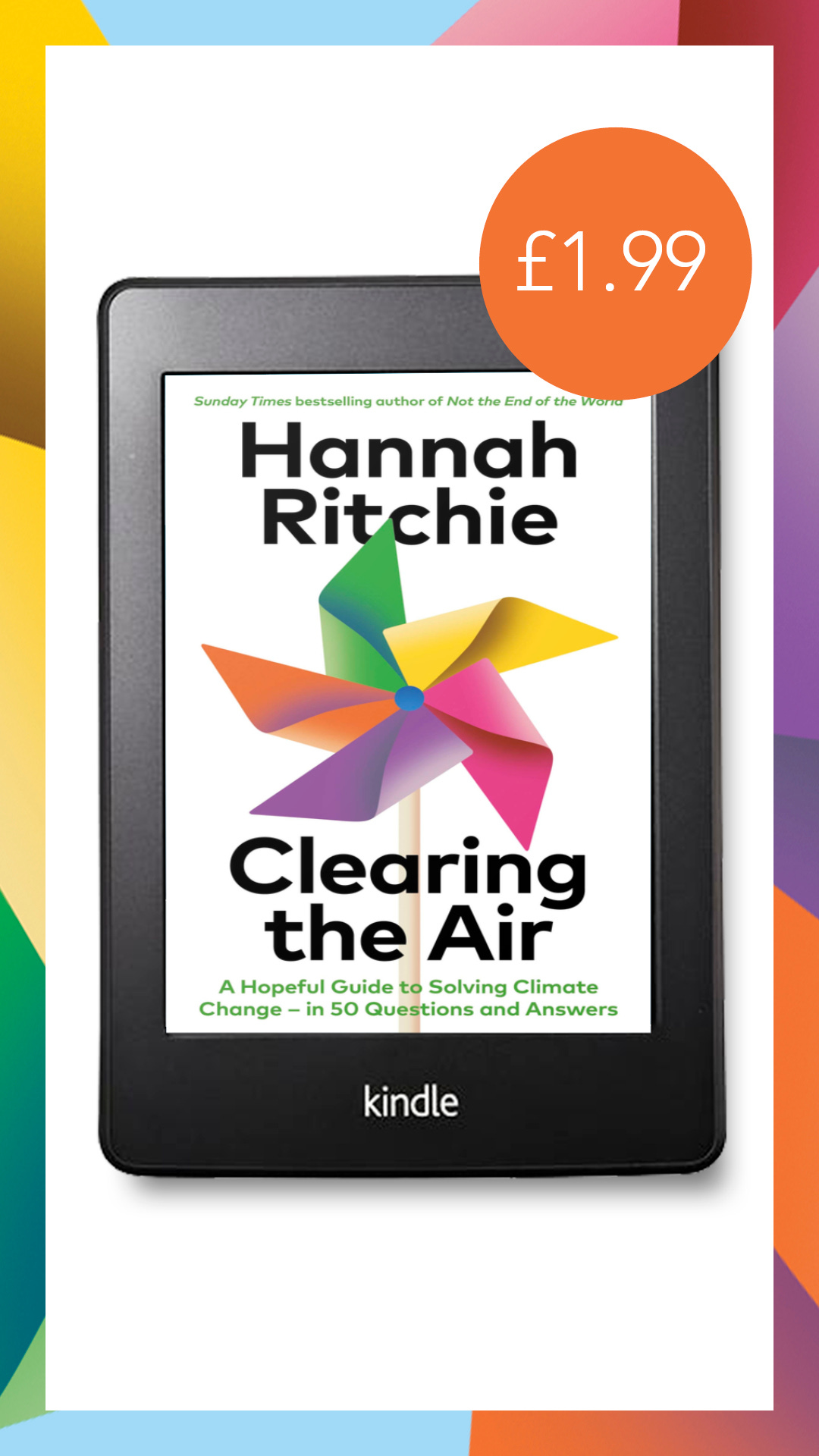
p.s. if you’re looking for some festive reading, my new book — Clearing the Air — is on offer at £1.99 on Kindle for the next 24 hours. Hope you enjoy!
If you don’t, thanks for following along this far. Note that you’ll have to do this on the app or on your Substack.com dashboard. I can’t do this for you via an email reply.
Thank you very much, Hannah, for your fantastic work! I think you are doing a great service to the sustainability movement by making this change! So I am already looking forward to see a broader mix of topics and maybe get a different perspective on some other topic as I may not have thought about the impact of making a certain change on some group in society or another aspect of the problem.
Have a great time over the holidays, Hannah and followers of this substack!
Great! I occasionally find myself in debates with ‘green scam’ types over whether the two main human forces of the past two thousand years, market forces and state forces, are natural forces. They are not even though both have profound consequences for nature. The climate change and lost bio diversity and the rolling loss of forests cut down for charcoal about which you have kept us informed so clearly. And the profound health consequences. More children’s lives lost due to charcoal fumes than any disease or malnutrition. As we know only too well, extracting and selling oil and gas remains highly profitable for BP and the big 4. Gazprom and Aramco continue to fund the Russian and Saudi Arabian states. The FDLR still produces charcoal in the forests of the Virunga park, and it’s still sold in the markets of Goma under the watchful eyes of their enemies the M23. Markets and states supply our demands. They are our two most powerful creations. They make use of but they are not driven fundamentally by another of our greatest creations - science. Our world in data. The great challenge we face is how to make markets and states responsive to the environmental imperatives observed data reveals when their main drivers are not. I feel your need to branch out. It is brilliant that battery and PV costs have crashed, that copper is plentiful enough to build grids and we have the tech for the energy, transport and farming transitions. But the profit that drives the extraction of minerals and the movement of people and stuff around the world and the power that comes from winning votes or controlling a security apparatus remain stubbornly detached from carbon concentrations in the atmosphere. Data does not move that dial. So I commend your decision.